

You're standing in the grocery aisle holding a tiny loaf of gluten-free bread in one hand and a carton of almond milk in the other, doing mental math that already looks bleak. Half the foods you normally buy for fast lunches and cheap dinners are off the list, yet the specialty swaps cost twice as much and leave you hungry an hour later. Most elimination menus online make that worse by treating every meal like a culinary project stacked with pricey substitutes.
A workable gluten free dairy free meal plan runs on two ledgers at once: nutrient accounting and grocery budgeting. Every meal needs to pull its weight on protein, calcium, iron, and fiber while relying mainly on naturally compliant whole foods instead of marked-up boxes.
Table of Contents
- Your 7-Day Gluten Free Dairy Free Meal Plan
- Check Before You Cut Gluten or Dairy
- Nutrient Targets the Plan Has to Hit
- Swaps and Label Rules That Keep Meals Balanced
- How to Build Your Own Week Step by Step
- Keeping the Plan Affordable and Realistic
- Start With One Week and Measure What Changes
Your 7-Day Gluten Free Dairy Free Meal Plan
Screenshot or print this menu before you shop. Every breakfast, lunch, dinner, and snack uses naturally gluten-free, dairy-free whole foods, keeping dinner portions around 25 to 30 grams of protein and pairing breakfast with a palm-sized protein source so your energy holds steady between meals.
| Day | Breakfast | Lunch | Dinner | Snack |
|---|---|---|---|---|
| Monday | Overnight oats with gluten-free oats, fortified soy milk, chia and berries | Lentil and vegetable soup with gluten-free bread | Sheet-pan salmon with potatoes and broccoli | Apple with almond butter |
| Tuesday | Egg and spinach scramble with rice cakes | Chickpea and quinoa bowl with lemon-tahini dressing | Chicken and rice stir-fry with tamari and bok choy | Hummus with carrot sticks |
| Wednesday | Smoothie with fortified soy milk, banana, oats and peanut butter | Leftover chicken and rice stir-fry | Black bean tacos on corn tortillas with salsa and avocado | Roasted chickpeas |
| Thursday | Gluten-free toast with mashed avocado and an egg | Tuna and white bean salad with olive oil and lemon | Calcium-set tofu coconut curry with rice | Handful of walnuts and an orange |
| Friday | Overnight oats with gluten-free oats, fortified soy milk and berries | Leftover tofu curry with rice | Grilled chicken with sweet potato and green beans | Rice cakes with peanut butter |
| Saturday | Smoothie with fortified soy milk, spinach, mango and flaxseed | Lentil salad with roasted vegetables and pumpkin seeds | Baked cod with quinoa and roasted carrots | Hummus with cucumber |
| Sunday | Egg and spinach scramble with gluten-free toast | Leftover cod with quinoa | Beef and vegetable chili with rice | Apple with almond butter |
This menu repeats core ingredients on purpose so you aren't cooking twenty-one separate recipes from scratch. One pot of lentils covers Monday's soup and Saturday's salad, one big batch of rice anchors three dinners, and planned leftovers handle Wednesday, Friday, and Sunday lunches.
How Batch Prep Keeps Sunday Under Two Hours
Spending ninety minutes on Sunday removes almost all midweek decision fatigue, which is when people usually abandon an elimination menu. Set up your kitchen in four parallel tracks rather than cooking one dish at a time:
- Cook Two Grains Together: Simmer a large pot of white or brown rice on one burner and a pot of quinoa on another, then cool and store both in airtight glass containers.
- Simmer the Lentil Base: Cook dried brown or green lentils with diced carrots, celery, onion, and garlic; pull out half for Saturday's cold salad before turning the rest into Monday's soup.
- Roast a Double Sheet Pan: Toss broccoli, carrots, and diced sweet potatoes with olive oil and salt, roasting them together at 400°F until tender so lunches assemble in minutes.
- Assemble Grab-and-Go Breakfasts: Stir together Monday's overnight oats in a jar using certified gluten-free rolled oats, fortified soy milk, chia seeds, and berries, and portion carrot sticks and cucumber slices alongside hummus.
Notice that packaged gluten-free bread shows up only three times all week, while naturally compliant staples like potatoes, corn tortillas, rice, oats, and beans do the heavy lifting. Next, look closely at whether you need both restrictions before locking in a long-term routine.
Check Before You Cut Gluten or Dairy
Before replacing bread and milk, establish why each needs to go. Cutting both without a clear clinical reason narrows your food choices, creates avoidable nutrient gaps, and can mean paying for substitutes you don't need.
Celiac disease is an immune-mediated condition affecting approximately 1% of populations of European and North American ancestry, and strict lifelong gluten avoidance is its only established treatment, according to a PubMed review of celiac disease nutrition. Dairy avoidance needs a separate decision. Intestinal damage around a celiac diagnosis can temporarily reduce lactase activity and cause lactose intolerance, but that doesn't automatically require permanent dairy removal.
Test for celiac disease while you are still eating gluten regularly. Standard blood and biopsy tests lose accuracy once wheat, barley, and rye leave your plate.
Establish What You Are Trying to Treat
Bloating or nausea alone doesn't tell you which restriction fits. Lactose intolerance means difficulty digesting milk sugar; milk-protein allergy involves an immune reaction to whey or casein. Those differences matter when choosing replacements. An elimination menu cannot diagnose celiac disease or inflammatory bowel conditions.
If you're sorting out daily discomfort, Yuve's walkthrough on how to identify trigger foods behind bloating offers a framework for logging symptoms before sweeping cuts. Discussing suspected gluten intolerance with your clinician can also help establish which investigations should come before dietary changes.
Keep the question specific: does gluten need excluding, does dairy need excluding, or is the reason for either restriction still unclear?
Why Careful Restriction Still Needs Nutrient Monitoring
A compliant menu doesn't guarantee adequate nutrition. Research on gluten-free diets identifies shortfalls involving zinc, vitamin D, iron stores, and calcium. Long-term avoidance therefore deserves attention to both food intake and appropriate clinical monitoring, rather than assuming that symptom improvement proves the diet supplies everything you need.
Book a medical evaluation rather than tightening your diet further if you notice these warning signs:
- Unexplained Weight Loss: Weight loss without trying can indicate malabsorption or another underlying condition that food swaps won't resolve.
- Blood in Your Stool: Visible bleeding or persistent nighttime diarrhea needs direct clinical assessment.
- Stubborn Symptoms Despite Strict Tracking: Continuing pain, nausea, or fatigue warrants investigation rather than more exclusions.
For each necessary replacement, account for what it supplies and what it costs. A substitute earns its place by filling a dietary need, not carrying a gluten-free or dairy-free label.
Nutrient Targets the Plan Has to Hit
Removing wheat, barley, and rye strips away common sources of dietary fiber and fortified B vitamins, especially when people replace whole wheat with refined gluten-free starches. Excluding milk, yogurt, and cheese simultaneously removes the primary everyday source of calcium and a major contributor of vitamin D and protein. A review of gluten-free diet adequacy in adults with celiac disease highlights how wide those gaps run: 46% to 54% failed to meet recommended iron intakes, 53% to 100% had inadequate vitamin D intake, and 12% to 78% fell short on calcium recommendations.
More recent evidence points to the same pattern across age groups. A 2025 systematic review on gluten-free nutrition again flagged micronutrient shortfalls in calcium, vitamin D, iron, vitamin B12, and vitamin E, alongside persistently low fiber and higher saturated fat when refined replacement foods dominate the plate. Relying on spinach or salad greens alone rarely closes the calcium gap because naturally occurring compounds in greens limit absorption, and lower-protein nut milks don't match cow's milk unless you choose fortified soy milk deliberately.
| Nutrient | Best sources in this plan | Coverage check |
|---|---|---|
| Calcium | Fortified soy milk, calcium-set tofu, canned sardines with bones, kale, tahini | Aim for 2 fortified servings plus 1 tofu or fish meal daily |
| Protein | Eggs, chicken, fish, tofu, lentils, beans, gluten-free oats | Protein at every meal; 25-30 g at dinner |
| Fiber | Lentils, black beans, chickpeas, certified gluten-free oats, fruit, vegetables | Legumes at lunch and dinner most days |
| Iron | Lentils, black beans, tofu, beef, pumpkin seeds, fortified oats | Pair with vitamin C (citrus, peppers) at the same meal |
| Vitamin D | Fortified soy milk, salmon, canned tuna, egg yolks | Oily fish 2x per week plus fortified milk daily |
| Zinc | Beef, chicken, lentils, chickpeas, pumpkin seeds, tofu | Legumes or meat at most meals |
| Vitamin B12 | Fish, meat, eggs, fortified plant milk | Animal foods or fortified milk daily |
| Iodine | Iodized salt, seafood, fortified dairy-free alternatives | Use iodized salt in cooking; seafood 1-2x per week |
The Daily Rule That Closes the Biggest Gaps
Tracking eight separate micronutrients in an app every evening gets exhausting fast. Instead, I recommend anchoring your plate to a simple three-part daily checklist that automatically pulls up the nutrients most likely to sag.
Daily nutrient rule: Every day, include at least one serving of calcium-fortified soy milk or calcium-set tofu, one serving of beans or lentils, and one vitamin-C food (like citrus, bell peppers, or berries) eaten alongside an iron-rich meal.
Look back at Thursday on the weekly menu to see that rule working in real life. White beans and tofu supply plant iron, lemon juice in the salad dressing and the afternoon orange improve iron absorption, calcium-set tofu handles calcium without dairy, and eggs plus tuna cover vitamin B12 and zinc. Adding iodized salt when seasoning your rice and roasted vegetables takes care of iodine, which many people lose when they stop consuming dairy and switch exclusively to uniodized sea salt.
Swaps and Label Rules That Keep Meals Balanced
Good swaps replace the nutritional job of a food, not just its texture. Swapping cow's milk for unfortified almond milk turns a high-protein, calcium-rich staple into flavored water, whereas unsweetened fortified soy milk preserves protein, calcium, vitamin D, and vitamin B12 in one pour. Similarly, replacing wheat pasta with red lentil or chickpea pasta boosts both fiber and protein, while leaning on rice, potatoes, and corn tortillas keeps costs down instead of buying expensive loaves for every meal.
Price matters right alongside nutrition. In July and August 2024, gluten-free bread in five large U.S. Midwest grocery stores averaged 52 cents per ounce, compared with 20 cents per ounce for gluten-containing bread, according to Healio's report on Bajaj and colleagues' research. Paying more than double per ounce makes sense once or twice a week when you want toast, not as your default carbohydrate three times a day.
| Instead of | Use | What it adds | Watch for |
|---|---|---|---|
| Cow's milk | Fortified soy milk | Protein, calcium, vitamin D, B12 | Almond and coconut milk are low in protein unless fortified |
| Butter | Olive oil or calcium-fortified dairy-free spread | Fat, calcium if fortified | Check for milk solids in spreads |
| Wheat pasta | Certified gluten-free pasta or lentil pasta | Fiber and protein from legume pasta | Cooking time; some gluten-free pasta turns mushy |
| Wheat bread | Gluten-free bread, rice, potatoes, corn tortillas | Carbohydrate (cheaper bases add fiber and cost less) | Gluten-free bread averaged 52 cents per ounce vs 20 cents for regular |
| Cheese | Nutritional yeast plus calcium-set tofu or tahini | Calcium, protein, savory flavor | Some dairy-free cheeses are low in protein |
| Soy sauce | Tamari | Umami | Standard soy sauce contains wheat |
| Yogurt | Fortified soy yogurt or a smoothie with fortified soy milk | Calcium, protein, probiotics | Check for milk protein in flavored varieties |
| Cream in soups | Blended white beans or cashews | Fiber, protein, creaminess | Cashews add fat; watch portion |
Store Label Rules and Hidden Cross-Contact
Packaged groceries hide both allergens in unexpected places, and reading the front of a box isn't enough. Keep this five-point check in mind whenever a new item enters your cart, especially if you're navigating dairy intolerance alongside gluten avoidance:
- Verify Certification When It Matters: Look for a certified gluten-free seal on oats, flours, pastas, and snacks, because oats frequently pick up wheat or barley dust during harvest and milling.
- Scan for Hidden Gluten Ingredients: Watch ingredient statements for wheat, barley, rye, malt, malt vinegar, and brewer's yeast, which turn up in broths, salad dressings, and spice blends.
- Read Past "Lactose-Free" Claims: Scan for milk, whey, casein, lactose, ghee, and butter; lactose-free cow's milk still contains milk proteins and won't work for a true dairy-free plan.
- Audit Ambiguous Staples: Swap regular soy sauce for gluten-free tamari, and inspect deli meats, sausages, marinades, and barbecue sauces where wheat starches or milk solids act as binders.
- Protect Shared Prep Surfaces: Use separate toasters or toaster bags, dedicated wood cutting boards (wood traps crumbs), clean fryers, and squeeze-bottle condiments so butter knives don't carry bread crumbs into peanut butter or hummus.
How to Build Your Own Week Step by Step
Once you've run the starter week, you'll want a repeatable way to rotate meals without starting from zero every Sunday. The visual below highlights the first two foundational steps before we walk through the full eight-step workflow.
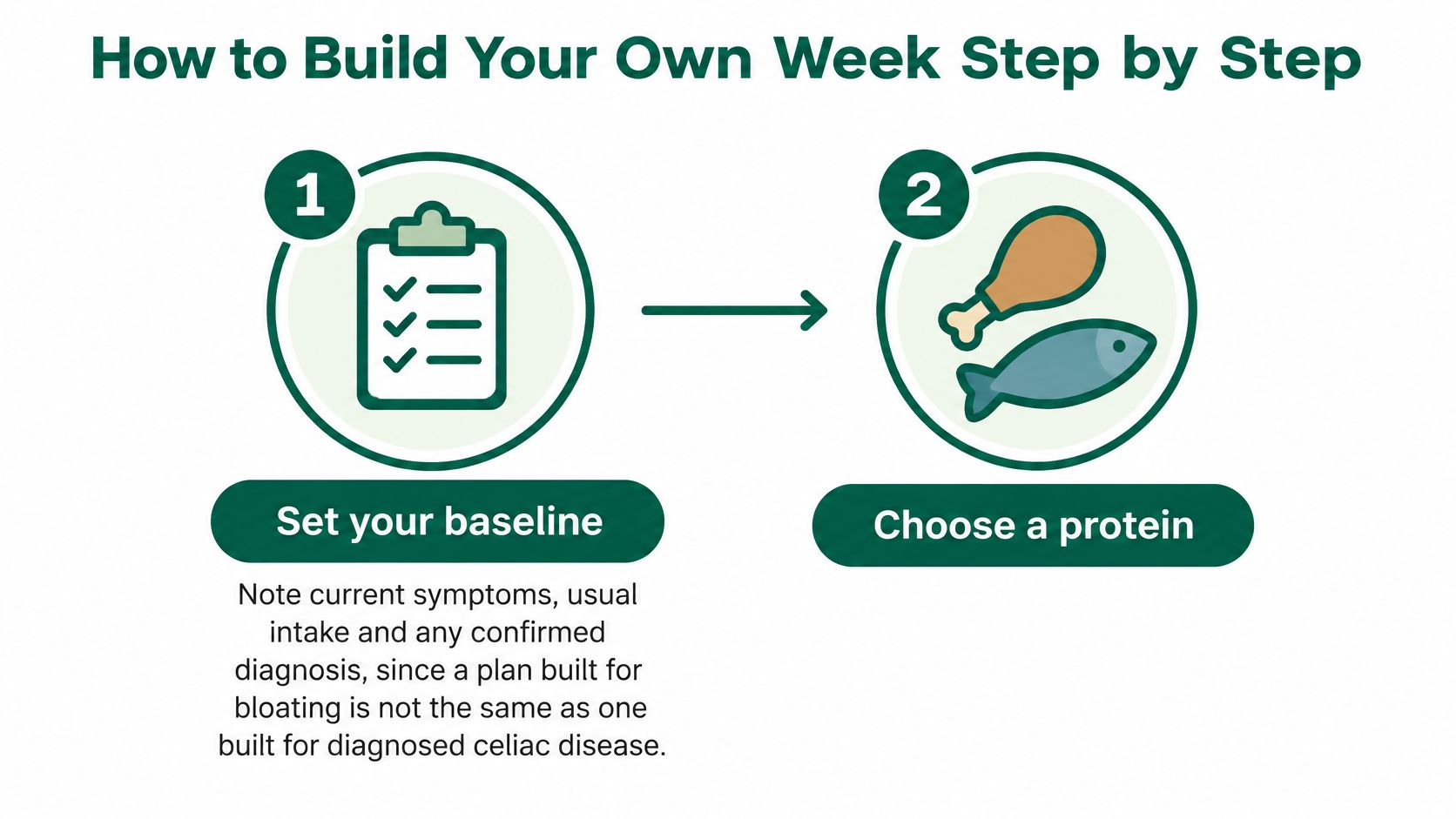
Follow these eight steps to build a custom seven-day menu that matches your tastes, schedule, and nutrient needs:
- Set your baseline before changing a plate. Write down your current symptoms, normal meals, and any confirmed diagnosis, because a short-term menu built to track bloating demands different kitchen protocols than lifelong celiac management.
- Anchor every dinner around protein. Pick seven dinner proteins first (such as salmon, cod, chicken thighs, lean beef, calcium-set tofu, or black beans) so you don't end up with starch-heavy bowls that leave you raiding the pantry at 9 p.m.
- Choose two batchable starches. Rice and potatoes, or quinoa and corn tortillas, cover a full week cheaply without cluttering your pantry with six half-used specialty flours.
- Schedule legumes for at least four lunches. Lentil soups, chickpea salads, white bean tuna bowls, and chili lock in fiber, iron, and zinc automatically.
- Lock in daily calcium sources. Put two cartons of unsweetened fortified soy milk and either a block of calcium-set tofu or two tins of bone-in sardines straight onto the shopping list.
- Group your grocery list by store aisle. Organize produce, proteins, dry staples, and refrigerated items separately, flagging any new sauces or packaged goods for an ingredient check before they go in the basket.
- Batch-cook four building blocks on one day. Cook one pot of legumes, one tray of roasted vegetables, one large pot of grains, and one tray of seasoned protein; mix and match sauces like lemon-tahini, salsa, or tamari-ginger so flavors stay varied.
- Review symptoms, energy, and compliance on day seven. An elimination diet normally lasts around 4 weeks, after which items are reintroduced one by one while symptoms and wellbeing are monitored, ideally with professional guidance rather than guesswork.
Why Written Logs Beat Memory on Adherence
Many individuals believe they stayed completely compliant when small slips crept in. A global meta-analysis of gluten-free diet adherence in people with celiac disease estimated objective adherence at 64% (95% CI, 59%–69%) compared with 74% (95% CI, 69%–79%) by self-report, proving that memory routinely overestimates real compliance.
Writing down meals, restaurant visits, and exact brand names closes that gap quickly. When symptoms flare midweek, a written log lets you trace the culprit to a restaurant fryer, an unverified marinade, or an overlooked milk-protein ingredient instead of assuming the whole diet failed.
For a quick visual walkthrough of practical gluten-free, dairy-free meal prep in a home kitchen, watch the clip below.
Keeping the Plan Affordable and Realistic
Cost is the quiet reason many people give up on elimination eating. In a 2024 study of households managing celiac disease, 47% experienced gluten-free food insecurity, which tracked directly with poorer diet adherence, heavier reliance on processed gluten-free foods, and lower intake of fresh produce and gluten-free grains. A related UK follow-up in the same publication noted that gluten-free items stayed more expensive and harder to find than conventional equivalents for more than a decade, with rural and remote shoppers facing thin local stock and steep shipping charges.
The graphic below highlights why specialty products drive grocery bills up so sharply when plans ignore household budgets.
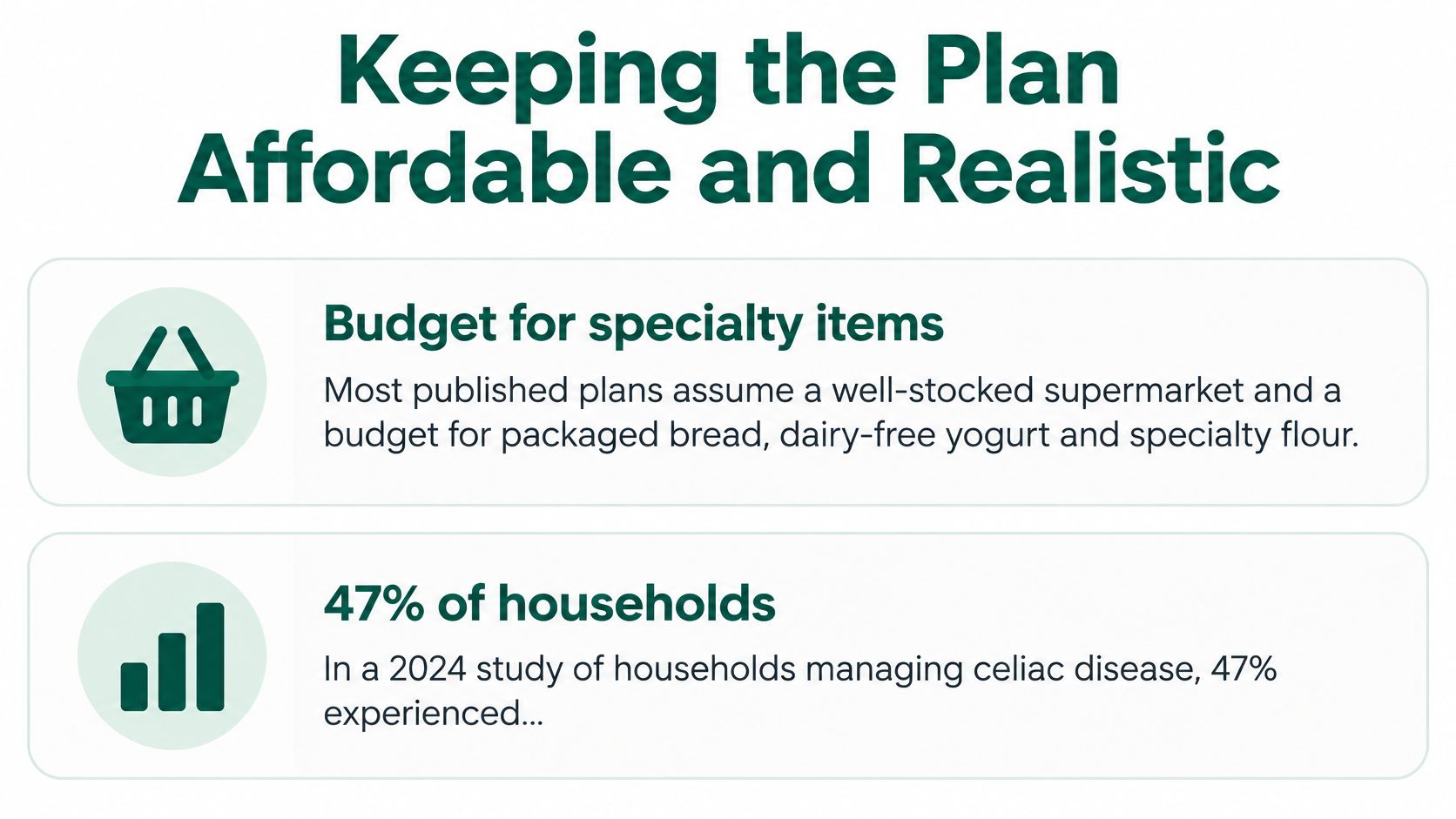
Dairy-free doesn't require plant-based cheese or yogurt, and gluten-free doesn't require packaged bread at every meal.
Budget Tactics That Protect Nutrient Quality
Shifting your spending away from imitation foods and toward naturally compliant whole foods lowers your receipt while raising fiber and micronutrient intake at the same time. Pairing those staple choices with the batch-shopping strategies in Just Cook It's budget meal guide makes stretching a weekly food budget far easier.
- Build Around Unprocessed Staples: Center 80% of your cart on white or brown rice, potatoes, corn tortillas, dried beans, lentils, eggs, canned tuna or sardines, seasonal produce, and plain chicken or ground beef, treating boxed crackers and specialty breads as occasional extras.
- Run a Quick Price-Per-Serving Check: Divide the shelf price by the number of realistic portions on the label. A pot of dried lentils, diced carrots, and rice yields six hearty bowls for a fraction of what a single box of specialty pasta plus shredded dairy-free cheese costs.
- Use Canned Fish and Eggs as Nutritional Bargains: Canned sardines with edible bones deliver calcium, vitamin D, and protein for far less per serving than boutique dairy-free yogurts, while eggs give you reliable morning protein and vitamin B12 at every supermarket.
- Freeze Bases and Stock a Backup Shelf: Double batches of beef chili, lentil soup, coconut tofu curry, and plain cooked rice freeze cleanly in flat zip bags for frantic weeknights. Keep canned black beans, canned chickpeas, and frozen broccoli on hand so you never default to pricey takeout when fresh produce runs low.
- Shop Realistically in Small or Rural Markets: When certified specialty brands aren't stocked locally, skip expensive online shipping fees and lean on naturally single-ingredient whole foods, reading labels carefully on any seasoned or packaged items to rule out wheat, barley, rye, and milk ingredients.
Start With One Week and Measure What Changes
Don't overcomplicate month one. Run the seven-day menu above exactly as written this week, jot down a two-line daily note tracking energy, digestion, and any unplanned restaurant meals, and check each day against the calcium, legume, and vitamin-C rule before deciding whether to continue.
If nagging digestive symptoms are driving this experiment, schedule a clinician visit before eliminating gluten long-term so diagnostic testing stays accurate, and bring your seven-day food and symptom log to the appointment. At the end of week one, keep the four or five meals that felt effortless, swap out anything you disliked using the eight-step routine, and repeat the structure. Persistent symptoms despite careful compliance warrant medical follow-up rather than cutting out more foods.
This seven-day menu works completely on its own, though if you'd rather automate weekly variety or get guided help structuring an elimination diet, we also offer a Meal Planning Service with over 30,000+ recipes, predefined diets such as dairy-free, keto, and low-carb where you can exclude specific ingredients you're intolerant or allergic to, plus eBooks and Nutritionist-led Programmes including an Elimination & Reintroduction Programme.
Ready to turn guesswork into a repeatable routine that fits your dietary restrictions and budget? Check My Body Health offers at-home sensitivity and allergy testing, a customizable Meal Planning Service with predefined dairy-free and gluten-free plans across 30,000+ recipes, and nutritionist-led Elimination & Reintroduction support to help you test and reintroduce foods methodically. Visit Check My Body Health to explore testing options and meal-planning tools suited to your needs.